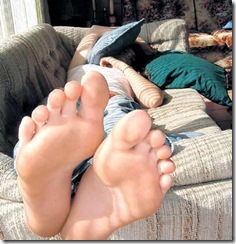
SLEEP DEPRIVATION Shaking limbs at night can be a neurological movement disorder Eveline Gan, eveline@mediacorp.com.sg “My legs kept moving,” said the retired banker, who is in her late 60s. “On nights when the attacks were bad, the shaking would be so violent that it’d disturb my husband too.” The worst part, added Mdm Tan, was that her problem was dismissed by her doctor friends, who had not heard of the condition. But the dark rings under her eyes, poor appetite and fatigue due to lack of sleep were proof that she wasn’t imagining her troubles. What Mdm Tan suffers from is Restless Legs Syndrome (RLS), a neurological movement disorder that sleep expert Dr Lim Li Ling, director of the sleep disorders unit at Singapore General Hospital, believes is under-recognised in Singapore. Dr Lim is the co-editor of medical publication Sleep Medicine: A Clinical Guide to Common Sleep Disorders and author of the guide’s chapter on RLS. She said that the disorder affects less than 1 per cent of the population in Singapore but added that this figure may be an under-estimate because RLS is not widely known to healthcare professionals who are not familiar with sleep-related disorders. “These symptoms are often mistaken for similar conditions such as leg cramps and arthritis pain,” she said. As a result, many cases of RLS may not be diagnosed. Shake a leg Living with RLS can be frustrating at the very least. For Mdm Tan, it is physically and emotionally debilitating. The condition causes uncomfortable creepy-crawly sensations in the legs, accompanied by an irresistible urge to move the legs. Often, inactivity worsens the condition, according to Dr Kenny Pang, a sleep specialist and ENT consultant, and director of the Pacific Sleep Centre. He added that sufferers tend to experience worse attacks in the evening and at night. According to Dr Pang, almost 85 per cent of RLS sufferers report difficulties falling asleep. And when they do sleep, their rest is disturbed by the involuntary, repetitive and periodic jerking of their limbs. As a result, many RLS sufferers feel tired or sleepy during the day. While the exact cause of RLS is unknown, it has long been associated with iron deficiency. The mineral is needed by the body to produce dopamine, or neurotransmitter. Dopamine pathway abnormalities are thought to be a factor in RLS, said Dr Lim. Genes may also play a part. Occasionally, RLS is associated with medical conditions such as nerve disease, kidney failure and pregnancy. Iron deficiency is common in the latter two conditions. No permanent cure For Mdm Tan, having to see several doctors and undergo weeks of tests before she was diagnosed with RLS was a costly and distressing experience. Even more depressing was the fact that there is no permanent cure. But making simple lifestyle changes can alleviate symptoms, said Dr Pang. They include cutting down on caffeine, smoking and alcohol, and following a regular sleep and exercise routine. Drugs such as dopamine agonists used to stimulate dopamine may relieve the symptoms. So can iron supplements, if the patient is iron-deficient. For those with RLS arising from kidney failure or pregnancy, treating the underlying conditions can alleviate the symptoms. Mdm Tan now keeps her restless legs under control by taking medication and following an elaborate evening routine of walking, practising qi gong and wrapping her legs in a thermal wrap before she goes to bed. “Imagine having to live your life with this disorder. I was depressed when I found out there wasn’t a cure but I told myself I won’t be defeated by it,” said the gung-ho lady. From TODAY, Health – Tuesday, 28-April-2009 In collaboration with Health Promotion Board
For over a year, Mdm Josephine Tan (not her real name) could not get a good night’s sleep because strange, prickling sensations in her legs would invariably lead to them shaking.
Thursday, April 30, 2009
Down to your last legs?
| Reactions: |
Khaw: Play safe, assume the worst
Neo Chai Chin, chaichin@mediacorp.com.sg
Back then, 33 people here died from the Severe Acute Respiratory Syndrome. Since then, progress has been made in laboratory capabilities and as well as alertness levels at hospitals and airports.
The Ministry of Health (MOH) is also looking at restricting the number of visitors for hospital patients — if developments over the next two days warrants it.
"As a general principal, if you don't have to visit hospitals, don't visit because it's not exactly a clean place. Why expose yourself unnecessarily?" said Mr Khaw.
Those who need to visit loved ones should maintain a high level of personal hygiene including frequent hand-washing.
Singapore also has a stockpile of Tamiflu — one of the antiviral drugs found to be effective against the swine flu virus — as well as personal protective equipment for hospital staff, he said.
MOH is likely to request hospital staff working in high-risk areas such as accident and emergency (A&E) wards and intensive care units to wear the personal protective equipment.
At least one hospital has already taken the initiative. Since Saturday, National University Hospital staff at the A&E temperature screening area have put on protective gowns in addition to the face mask routinely worn.
NUH and the Singapore General Hospital said patients are also asked about their travel histories. "Patients ... with travel history to Mexico, USA and Canada will be asked to alert our staff. Visitors with travel history and who are feeling unwell are advised not to visit patients, and to seek medical attention," said SGH chief executive Prof Ang Chong Lye.
Indeed, disclosure of travel history becomes "very important", said Mr Khaw, given how swine flu symptoms such as fever, cough and sore throat are similar to that of regular flu.
And while the swine flu outbreak could be "just a very localised" one that will "eventually burn itself out", Mr Khaw said Singapore will "play safe and assume the worst."
From TODAY, News – Monday, 27-April-2009
| Reactions: |
Agencies take action: Scanners at the airport
Swine flu alert
Neo Chai Chin, chaichin@mediacorp.com.sg
THERE are no known cases of swine flu in Singapore, but preventive measures have already kicked in at Changi Airport.
From 11pm yesterday, thermal scanners were deployed to screen passengers arriving from the United States. And from 8am today, all passengers arriving at Terminals 1, 2 and 3 will also have to undergo thermal scans just before their immigration checks. Those arriving at the Budget Terminal and Seletar Airport will have to do so from Wednesday, said the Health Ministry and the Civil Aviation Authority of Singapore in a joint statement last night.
Those with higher-than-normal temperatures will be put through further medical assessments.
Speaking to the media after a block visit in Woodlands yesterday, Health Minister Khaw Boon Wan said it is too early to close our borders as this will affect the economy and food supply.
However, given the US' connectedness with the rest of the world, he warned it could be a matter of hours before swine flu reaches Singapore, hence the high level of alertness.
The Ministry has also advised Singaporeans to postpone or avoid non-essential travel to Mexico.
Those who develop flu-like symptoms including high fever, cough, and runny nose within seven days of travel to California, Texas or Kansas in the United States, or to Mexico, should seek medical attention.
So far, the World Health Organization does not consider a human swine flu pandemic to be imminent — the outbreak in Mexico and the US, however, constitute a Public Health Emergency of International Concern.
And although humans cannot get swine flu from eating pork or pork products, the Agrifood and Veterinary Authority will be testing incoming pork products for the flu virus.
It will also step up surveillance testing of pigs from Pulau Bulan in Indonesia — Singapore's only source of live pigs — to ensure they are not infected with the virus behind the current outbreak.
Singapore does not import pork from Mexico, nor does it import pigs from the US.
From TODAY – Monday, 27-April-2009
Race to contain outbreak
MEXICAN SWINE FLU
WHO to consider tomorrow whether to raise threat level
WASHINGTON — The world's governments raced to avoid both a pandemic and global hysteria yesterday as more possible swine flu cases surfaced from Canada to New Zealand and the United States declared a public health emergency.
Mexico, the outbreak's epicentre with up to 86 suspected deaths, closed churches, markets and restaurants. Few people ventured onto the streets, and some wore face masks. Canada became the third country to confirm cases, in six people, including some students who — like some New York City spring-breakers — got mildly ill in Mexico.
In Mexico, soldiers handed out six million surgical-style masks to deal with a deadly flu strain that officials say may have sickened 1,400 people since April 13.
Countries across Asia promised to quarantine feverish travellers returning from flu-affected areas.
The US declared the health emergency so it could ship roughly 12 million doses of flu-fighting medication from a federal stockpile to states in case they eventually need them — although with 20 confirmed cases of people recovering easily, they do not appear to for now.
Make no mistake: There is not a global pandemic — at least not yet. It is not clear how many people truly have this particular strain, or why all countries but Mexico are seeing a mild form of the disease. Nor is it clear if the new virus spreads easily, one milestone that distinguishes a bad flu from a global crisis. But waiting to take protective steps until after a pandemic is declared would be too late.
"We do think this will continue to spread but we are taking aggressive actions to minimise the impact on people's health," said Dr Richard Besser, acting chief of the US Centres for Disease Control and Prevention.
President Barack Obama's administration sought to look both calm and in command, striking a balance between informing Americans without panicking them. Mr Obama himself was playing golf while US officials used a White House news conference to compare the emergency declaration with preparing for an approaching hurricane.
"Really that's what we're doing right now. We're preparing in an environment where we really don't know ultimately what the size or seriousness of this outbreak is going to be," Homeland Security Secretary Janet Napolitano told reporters.
The World Health Organisation and the US were following precautions developed over the past five years to prepare for the next super-flu.
The WHO, which on Saturday asked all countries to step up detection of this strain of A/H1N1 swine flu, will consider tomorrow whether to raise the pandemic threat level, in turn triggering additional actions. AP
From TODAY – Monday, 27-April-2009
Wednesday, April 29, 2009
Mexico closes all schools as swine flu kills 60; disease has spread to US: WHO
MEXICO CITY — A rare outbreak of human swine flu has killed 60 people in Mexico and has spread to the United States where authorities are on alert, the World Health Organisation (WHO) said on Friday.
Mexican authorities on Friday closed all schools in the capital and central Mexico. According to the UN health agency, swine flu regularly hits pigs but rarely humans.
"To date there have been some 800 suspected cases with flu-like illness, with 57 deaths in the Mexico City area," said Ms Fadela Chaib, a spokeswoman for the UN health agency. Three deaths were recorded in San Luis Potosi in central Mexico.
In a televised statement, Mexican Health Minister Jose Angel Cordova urged people to avoid large crowds, shaking hands, kissing as a greeting, or using the subway.
Most of the Mexican cases were found in healthy young adults with no known record of prior illness. The Mexican government has gathered 600,000 vaccines to help protect health care workers.
Warning that swine influenza — which combines pig, bird and human viruses — could potentially cause a human flu pandemic, the WHO said there are at least seven cases in the United States, in three clusters - five in California and two in Texas.
All the US victims have recovered, but the cases are a medical mystery because it's unclear how they caught the virus.
None of the seven were in contact with pigs, which is how people usually catch swine flu and only a few were in contact with each other, said the US Centers for Disease Control and Prevention.
Scientists keep a close eye on flu viruses in pigs, because pigs are particularly susceptible to both avian and human viruses and a likely place where genetic reassortment can take place that might lead to a new form of pandemic flu. Agencies
From TODAY, World – Weekend, 25/56-April-2009
Safe hygiene practices for cleaners, too
Letter from Paul Antony Fernandez
I REFER to the recent debate about hygiene standards at hawker stalls.
It is indeed good to note that the National Environment Agency (NEA) will intensify its efforts in educating hawkers on the importance of safe hygiene practices.
May I also seek the assistance of NEA in ensuring that safe hygiene habits are also practised by another group of people handling food in public places: cleaning contractors.
Often, cleaning contracts are awarded to contractors with the lowest bids and there is a monopoly of such services regardless of their track record in adopting cleanliness. When you visit a hawker centre or an established food outlet, you often notice that the leftover food is not cleared immediately. The most common reason cited is a lack of manpower.
This problem can be overcome by paying the cleaners sustainable salaries, which in turn will entice others to join the workforce.
Another unsightly practice is that cleaners often use the same old dirty cloth to wipe tables, dipping them into the same bucket of dirty water over and over.
It doesn't stop there: These cleaners also have the habit of wiping food off the tables and on to the floor.
Perhaps NEA officers, during their enforcement rounds, should also observe the assigned cleaners and when a violation is detected, not just reprimand the cleaners but take action against their employers for failing to inculcate safe hygiene practices among their cleaners.
From TODAY, Voices – Friday, 24-April-2009
| Reactions: |
Tuesday, April 28, 2009
Swine Flu and You
Swine Influenza and You
What is swine flu?
Swine Influenza (swine flu) is a respiratory disease of pigs caused by type A influenza viruses that causes regular outbreaks in pigs. People do not normally get swine flu, but human infections can and do happen. Swine flu viruses have been reported to spread from person-to-person, but in the past, this transmission was limited and not sustained beyond three people.
Are there human infections with swine flu in the U.S.?
In late March and early April 2009, cases of human infection with swine influenza A (H1N1) viruses were first reported in Southern California and near San Antonio, Texas. Other U.S. states have reported cases of swine flu infection in humans and cases have been reported internationally as well. An updated case count of confirmed swine flu infections in the United States is kept at http://www.cdc.gov/swineflu/investigation.htm. CDC and local and state health agencies are working together to investigate this situation.
Is this swine flu virus contagious?
CDC has determined that this swine influenza A (H1N1) virus is contagious and is spreading from human to human. However, at this time, it is not known how easily the virus spreads between people.
What are the signs and symptoms of swine flu in people?
The symptoms of swine flu in people are similar to the symptoms of regular human flu and include fever, cough, sore throat, body aches, headache, chills and fatigue. Some people have reported diarrhea and vomiting associated with swine flu. In the past, severe illness (pneumonia and respiratory failure) and deaths have been reported with swine flu infection in people. Like seasonal flu, swine flu may cause a worsening of underlying chronic medical conditions.
How does swine flu spread?
Spread of this swine influenza A (H1N1) virus is thought to be happening in the same way that seasonal flu spreads. Flu viruses are spread mainly from person to person through coughing or sneezing of people with influenza. Sometimes people may become infected by touching something with flu viruses on it and then touching their mouth or nose.
How can someone with the flu infect someone else?
Infected people may be able to infect others beginning 1 day before symptoms develop and up to 7 or more days after becoming sick. That means that you may be able to pass on the flu to someone else before you know you are sick, as well as while you are sick.
What should I do to keep from getting the flu?
First and most important: wash your hands. Try to stay in good general health. Get plenty of sleep, be physically active, manage your stress, drink plenty of fluids, and eat nutritious food. Try not touch surfaces that may be contaminated with the flu virus. Avoid close contact with people who are sick.
Are there medicines to treat swine flu?
Yes. CDC recommends the use of oseltamivir or zanamivir for the treatment and/or prevention of infection with these swine influenza viruses. Antiviral drugs are prescription medicines (pills, liquid or an inhaler) that fight against the flu by keeping flu viruses from reproducing in your body. If you get sick, antiviral drugs can make your illness milder and make you feel better faster. They may also prevent serious flu complications. For treatment, antiviral drugs work best if started soon after getting sick (within 2 days of symptoms).
How long can an infected person spread swine flu to others?
People with swine influenza virus infection should be considered potentially contagious as long as they are symptomatic and possible for up to 7 days following illness onset. Children, especially younger children, might potentially be contagious for longer periods.
What surfaces are most likely to be sources of contamination?
Germs can be spread when a person touches something that is contaminated with germs and then touches his or her eyes, nose, or mouth. Droplets from a cough or sneeze of an infected person move through the air. Germs can be spread when a person touches respiratory droplets from another person on a surface like a desk and then touches their own eyes, mouth or nose before washing their hands.
How long can viruses live outside the body?
We know that some viruses and bacteria can live 2 hours or longer on surfaces like cafeteria tables, doorknobs, and desks. Frequent handwashing will help you reduce the chance of getting contamination from these common surfaces.
What can I do to protect myself from getting sick?
There is no vaccine available right now to protect against swine flu. There are everyday actions that can help prevent the spread of germs that cause respiratory illnesses like influenza. Take these everyday steps to protect your health:
- Cover your nose and mouth with a tissue when you cough or sneeze. Throw the tissue in the trash after you use it.
- Wash your hands often with soap and water, especially after you cough or sneeze. Alcohol-based hand cleaners are also effective.
- Avoid touching your eyes, nose or mouth. Germs spread this way.
- Try to avoid close contact with sick people.
- If you get sick with influenza, CDC recommends that you stay home from work or school and limit contact with others to keep from infecting them.
If you are sick, limit your contact with other people as much as possible. Do not go to work or school if ill. Cover your mouth and nose with a tissue when coughing or sneezing. It may prevent those around you from getting sick. Put your used tissue in the waste basket. Cover your cough or sneeze if you do not have a tissue. Then, clean your hands, and do so every time you cough or sneeze.
What is the best way to keep from spreading the virus through coughing or sneezing?
If you are sick, limit your contact with other people as much as possible. Do not go to work or school if ill. Cover your mouth and nose with a tissue when coughing or sneezing. It may prevent those around you from getting sick. Put your used tissue in the waste basket. Cover your cough or sneeze if you do not have a tissue. Then, clean your hands, and do so every time you cough or sneeze.
What is the best technique for washing my hands to avoid getting the flu?
Washing your hands often will help protect you from germs. Wash with soap and water. or clean with alcohol-based hand cleaner. we recommend that when you wash your hands -- with soap and warm water -- that you wash for 15 to 20 seconds. When soap and water are not available, alcohol-based disposable hand wipes or gel sanitizers may be used. You can find them in most supermarkets and drugstores. If using gel, rub your hands until the gel is dry. The gel doesn't need water to work; the alcohol in it kills the germs on your hands.
What should I do if I get sick?
If you live in areas where swine influenza cases have been identified and become ill with influenza-like symptoms, including fever, body aches, runny nose, sore throat, nausea, or vomiting or diarrhea, you may want to contact their health care provider, particularly if you are worried about your symptoms. Your health care provider will determine whether influenza testing or treatment is needed.
If you are sick, you should stay home and avoid contact with other people as much as possible to keep from spreading your illness to others.
If you become ill and experience any of the following warning signs, seek emergency medical care.
In children emergency warning signs that need urgent medical attention include:
- Fast breathing or trouble breathing
- Bluish skin color
- Not drinking enough fluids
- Not waking up or not interacting
- Being so irritable that the child does not want to be held
- Flu-like symptoms improve but then return with fever and worse cough
- Fever with a rash
- Difficulty breathing or shortness of breath
- Pain or pressure in the chest or abdomen
- Sudden dizziness
- Confusion
- Severe or persistent vomiting
Like seasonal flu, swine flu in humans can vary in severity from mild to severe. Between 2005 until January 2009, 12 human cases of swine flu were detected in the U.S. with no deaths occurring. However, swine flu infection can be serious. In September 1988, a previously healthy 32-year-old pregnant woman in Wisconsin was hospitalized for pneumonia after being infected with swine flu and died 8 days later. A swine flu outbreak in Fort Dix, New Jersey occurred in 1976 that caused more than 200 cases with serious illness in several people and one death.
Can I get swine influenza from eating or preparing pork?
No. Swine influenza viruses are not spread by food. You cannot get swine influenza from eating pork or pork products. Eating properly handled and cooked pork products is safe.
Taken from CDCP site; the original article is here.
| Reactions: |
Charred meat ups pancreatic cancer risk
WASHINGTON — Regularly eating meat cooked at a high temperature, to the point of charring, could increase the risk of pancreatic cancer by 60 per cent, researchers said on Tuesday.
“Our findings in this study are further evidence that turning down the heat when grilling, frying, and barbecuing to avoid excess burning or charring of the meat may be a sensible way for some people to lower their risk for getting pancreatic cancer,” said Ms Kristin Anderson of the University of Minnesota, who led the study. She said the research found that well and very well done meats cooked by frying, grilling or barbecuing formed carcinogens.
Meat that is baked, stewed or cooked at lower temperatures does not form carcinogens, she added. The study tracked the eating habits of 62,581 healthy people over nine years, after which 208 cases of pancreatic cancer were found. AFP
From TODAY, World – Thursday, 23-April-2009
| Reactions: |
Two ministers, two approaches
FOOD STALL HYGIENE
Benchmark idea for hospital canteens ‘helpful’, but won’t work for hawker stalls: Yaacob
Leong Wee Keat, weekeat@mediacorp.com.sg
WHILE he welcomes the Health Minister’s firm stance that food stalls at public hospitals must score an “A” or “B” on cleanliness, that is Mr Khaw Boon Wan’s “prerogative”, says Minister for Environment and Water Resources Yaacob Ibrahim, who rules out tying hawker stall tenders to hygiene grades.
“If we just penalise them just because they are (graded) Cs and Ds, there may be other implications,” said Dr Yaacob yesterday. “I think some hawkers have already mentioned ... that this may affect their livelihood. So, rather than make it a legal requirement, we work with them ... On the part of NEA (National Environment Agency), we will continue to work with the hawkers and hawkers’ association to improve their hygiene standards.”
He also called on consumers to send a signal by choosing a B-graded stall over one graded C.
On Sunday, Health Minister Khaw Boon Wan suggested linking the renewal of stall tenders at hospitals to their hygiene ratings, with those not meeting the mark told to close shop.
While there is clear consensus that cleanliness standards need to be improved, why such divergent approaches from two ministers?
There is “no right or wrong” in either approach, said Madam Halimah Yacob who chairs the Government Parliamentary Committee (GPC) for Health.
In hospitals, the public expect the “highest standard of hygiene possible” and if mass food poisoning were to occur, “the psychological impact would be far greater”, she felt. Pointing out that hospital food stalls see a different clientele, Mdm Halimah added: “Besides visitors, customers could also be patients waiting to see a doctor.”
Her counterpart helming the GPC for Environment, Mr Charles Chong, pointed out that while food stalls in hospitals could be purpose-built, hawker centres on the other hand come in a wide range — including makeshift temporary ones.
“Some are old, some are new. If they impose a minimum standard straight away ... there will be an uproar from the hawkers who may complain that they have been subjectively graded,” he said.
Numbers could also make a difference: While there are just six restructured hospitals, there are 106 hawker centres across the island with 5,600 stalls.
-----
No hygiene rating for night markets
Pasar malams will not be given a hygiene rating — in spite of the fact that more food stall operators at such night markets were booked last year for hygiene lapses — but that does not mean they are not scrutinised, said Dr Yaacob Ibrahim.
Pasar malams “operate on a very short basis” and by the time the grading is done, the markets are over. “The most important thing is to make sure we check. So, don’t be under the impression that pasar malams are not being supervised ... Our inspectors are down on the ground to supervise,” the Minister said.
There are also licensing requirements, such as that food must be prepared beforehand, with only heating up or frying allowed. Last year, 45 enforcement tickets were issued, up from 31 in 2007 and 23 in 2006.
ONG DAI LIN
-----
Since 2001, 72 centres have been upgraded with the remaining 30 or so to be madeover by 2012. And Dr Yaacob is confident this would help significantly to raise standards. After all, he revealed, 99 per cent of the stall holders who have benefitted from the Hawker Centre Upgrading Programme, have achieved “A” or “B” grades.
“This shows that as we begin to improve the ambience, design, layout and impose better cleaning practices, hawkers can do a good job in terms of improving hygiene standards,” he said.
The 12-year-old hygiene grading system assesses food hawkers based on cleanliness, housekeeping and food and personal hygiene. Last year, more than 85 per cent of stalls scored an “A” or “B”.
The weak chink in the armour: The four temporary markets currently, where more than nine in 10 stalls have “C” grades. Inspections of such markets have been stepped up, Dr Yaacob said.
Mr Chong hopes more can be done. He got the sense, after speaking to some hawkers, that many are not clear on how grading is conducted. The authorities could also think of ways — such as rental rebates — to reward hawkers who move from a “C” to an “A” grade, he said.
From TODAY, News – Thursday, 23-April-2009
| Reactions: |
Tamiflu, available over the counter?
With Tamiflu being the only drug (currently) to be reactive and curative of the swine flu, authorities are now at work to make it available over the counter.Well, this is a life-and-death situation, so I think the move is needed and justified.
At best, may we never be infected...
See the site here.
God bless!
| Reactions: |
Oseltamivir, Tamiflu
Tamiflu. That is the trade name.
The other name is Oseltamivir, and it is available through prescription only.
Wikipedia article is here.
Tamiflu homepage is here.
May this post help those who need this information.
| Reactions: |
Egyptian boy dies of bird flu
Egypt has the highest number of avian-flu cases outside Asia, according to the most recent data from the World Health Organisation. With the newest reports, the number of infected people there has reached 67.
The boy is the first fatality attributed to the virus in Egypt this year, the news agency quoted a spokesman for the Health Ministry as saying. The boy had shown symptoms of the virus on March 22 after coming in contact with dead birds.
The ministry reported the 67th infection earlier yesterday, saying that a four-year-old boy had contracted the virus. The boy has been given Tamiflu and is in stable condition in hospital.
The Swiss manufacturer of the antiviral medicine, Roche, says it can reduce the severity and duration of flu symptoms if taken within 48 hours of the onset of disease. Early treatment for the H5N1 avian flu may improve survival, some uncontrolled studies have shown.
BLOOMBERG
From TODAY, World – Wednesday, 22-April-2009
| Reactions: |
Monday, April 27, 2009
Facts about Leptospirosis
Leptospirosis is a bacterial disease that affects humans and animals. It is caused by bacteria of the genus Leptospira. In humans it causes a wide range of symptoms, and some infected persons may have no symptoms at all. Symptoms of leptospirosis include high fever, severe headache, chills, muscle aches, and vomiting, and may include jaundice (yellow skin and eyes), red eyes, abdominal pain, diarrhea, or a rash. If the disease is not treated, the patient could develop kidney damage, meningitis (inflammation of the membrane around the brain and spinal cord), liver failure, and respiratory distress. In rare cases death occurs.
Many of these symptoms can be mistaken for other diseases. Leptospirosis is confirmed by laboratory testing of a blood or urine sample.
How do people get leptospirosis?
Outbreaks of leptospirosis are usually caused by exposure to water contaminated with the urine of infected animals. Many different kinds of animals carry the bacterium; they may become sick but sometimes have no symptoms. Leptospira organisms have been found in cattle, pigs, horses, dogs, rodents, and wild animals. Humans become infected through contact with water, food, or soil containing urine from these infected animals. This may happen by swallowing contaminated food or water or through skin contact, especially with mucosal surfaces, such as the eyes or nose, or with broken skin. The disease is not known to be spread from person to person.
How long is it between the time of exposure and when people become sick?
The time between a person's exposure to a contaminated source and becoming sick is 2 days to 4 weeks. Illness usually begins abruptly with fever and other symptoms. Leptospirosis may occur in two phases; after the first phase, with fever, chills, headache, muscle aches, vomiting, or diarrhea, the patient may recover for a time but become ill again. If a second phase occurs, it is more severe; the person may have kidney or liver failure or meningitis. This phase is also called Weil's disease.
The illness lasts from a few days to 3 weeks or longer. Without treatment, recovery may take several months.
Where is leptospirosis found?
Leptospirosis occurs worldwide but is most common in temperate or tropical climates. It is an occupational hazard for many people who work outdoors or with animals, for example, farmers, sewer workers, veterinarians, fish workers, dairy farmers, or military personnel. It is a recreational hazard for campers or those who participate in outdoor sports in contaminated areas and has been associated with swimming, wading, and whitewater rafting in contaminated lakes and rivers. The incidence is also increasing among urban children.
How is leptospirosis treated?
Leptospirosis is treated with antibiotics, such as doxycycline or penicillin, which should be given early in the course of the disease. Intravenous antibiotics may be required for persons with more severe symptoms. Persons with symptoms suggestive of leptospirosis should contact a health care provider.
Can leptospirosis be prevented?
The risk of acquiring leptospirosis can be greatly reduced by not swimming or wading in water that might be contaminated with animal urine.
Protective clothing or footwear should be worn by those exposed to contaminated water or soil because of their job or recreational activities.
-----
This is lifted from CDCP site. A printable PDF format from the same site can be found here.
The e-mail version telling of how somebody died due to leptospirosis is below; this is what prompted me to hunt for this article. And basing on the way the e-mail is made, it is easily determined to be simply fabricated, and would fall under the category of a 'hoax mail'. It even goes to the point of identifying the canned drink brand, then later on says that it affects 'all soda cans'... Nonetheless, what it is saying about leptospirosis is true. Be informed. Be warned. Be spared.
-----
A woman went boating one Sunday taking with her some cans of Coke which she put into the refrigerator of the boat. On Monday she was taken to the hospital and placed in the Intensive Care Unit. She died on Wednesday.
The autopsy concluded she died of leptospirosis. This was traced to the can of Coke she drank from, not using a glass. Tests showed that the can was infected by dried rat urine and hence the disease leptospirosis.
Rat urine contains toxic and deathly substances. It is highly recommended to thoroughly wash the upper part of all soda cans before drinking out of them. The cans are typically stocked in warehouses and transported straight to the shops without being cleaned.
A study at NYCU showed that the tops of all soda cans are more contaminated than public toilets (i.e., full of germs and bacteria). So wash them with water before putting them to the mouth to avoid any kind of fatal accident.
Better still don't drink, bad for health.
-----
| Reactions: |
Singapore joins global trial to test dengue vaccine
Over the next six months, local medical researchers hope to recruit about 1,200 people for this study, estimated to take about four years to complete.
Professor Leo Yee Sin, clinical director at the Communicable Disease Centre of Singapore, will assist in this clinical trial.
Despite the high level of dengue awareness among health authorities and Singaporeans, the condition remains a complex issue.
In Singapore, there are four known strains of the disease.
According to Prof Leo, a patient immune to one strain is still susceptible to infection by another. So, one objective of the trial is to develop one vaccine capable of fighting against the various dengue strains.
“If proven to be safe and effective, and if it is proven that these vaccines can co-exist with the administering of other vaccines, it will be a feasible and doable solution. Then it can become part of the integrated vaccination programme,” said Prof Leo.
Head of Sanofi’s Clinical Dengue Programme, Dr Melanie Saville, said the company is targeting to develop the vaccine within the next five to six years.
And a priority is to make the dengue vaccine available to endemic countries at affordable prices.
“Cost is something very important in many endemic countries. And our company does have a policy to ensure access of these vaccines to people who most need it,” said Dr Saville, who said tiered pricing was one option that should be looked at in collaboration with governments.
According to the World Health Organisation, there are 1.8 billion people in the Asia-Pacific at risk of dengue fever.
938LIVE
From TODAY, News – Wednesday, 22-April-2009
| Reactions: |
ask the paediatrician
A thumbs-up to clean hands
a public education project supported by the Singapore Paediatric Society (www.sps.org.sg) and Lion Corporation
Q1
I just recovered from flu and now my husband and children are sick. This always happens to my family when one of us falls sick. How can I stop the spread of germs and prevent us from getting sick frequently?
A
The flu virus is spread by the release of tiny droplets of nasal or oral secretions from the sufferer. These droplets can land on any surface or on another person.
The virus, which can live for days on a suitable surface, is most commonly spread by contamination from fingers and objects on which it is residing.
Practising good personal hygiene will help in protecting you and your family.
If a family member falls sick with an upper respiratory tract infection, observe the following:
- Do not share eating utensils. The virus on the utensil is waiting to be passed on to the next pair of hands.
- Always wash hands before eating to prevent the spread of germs on the hands.
- Cover your nose and mouth when coughing and sneezing and wash your hands after that.
- Avoid close contact (for example, kissing and hugging) with the person when he or she is sick.
Adopt healthy lifestyle practices. This can help to decrease your susceptibility of developing an illness. These practices include:
- Regular exercise
- Healthy eating
- Following a no-smoking lifestyle
- Managing stress
Q2
Some of the students in my daughter’s childcare centre were infected by Hand, Foot and Mouth Disease (HFMD). I’m very worried that she will get infected and spread it to her younger siblings. I understand that the schools teach them hygiene, but I’m still worried. What should I do?
A
HFMD is caused by a virus that can spread by direct contact with the nasal discharge, saliva, faeces and fluid from the rash of an infected person.
Hence the best way to prevent it would be to instil good hygiene practices. This can be done by reinforcing its importance to everyone in the family.
Teach your daughter and her siblings, if they are old enough to understand, the following:
- Wash their hands with soap, especially before eating and after going to the toilet.
- To cover their nose and mouth when coughing or sneezing.
- Not to share eating utensils with others.
You should also clean dirty surfaces and soiled items such as toys before they are used again. If your daughter does get infected with HFMD, consult a doctor early.
Look out for any change in her behaviour or if she refuses to eat and/or drink or starts to vomit.
Keep her at home till all the blisters have dried. Avoid close contact (for example, kissing and hugging) with the others who are well, until she recovers.
Keep her toys, eating utensils, towels and clothes separate from the others. Practise the good hygiene measures as mentioned earlier.
There is no specific preventive measure for HFMD, but good hygiene practices can help to lower the risk of infection.
-----
Questions were answered by Dr Khoo Poh Choo from the Singapore Paediatric Society. The information provided is for your general knowledge only. You should seek professional advice or treatment for your child’s condition.
Q1, our question of the week wins a Kirei Kirei gift set worth $60. The winner has been notified. Stand a chance at winning this gift set by emailing your questions on hygiene care to hygienecare@newstoday.com.sg
-----
From TODAY, Health – Tuesday, 21-April-2009
| Reactions: |
ASK THE DOC: Weak bladder
Question by Troubled
I am a 22-year-old male. Since last year, I’ve been unable to control my bladder. Sometimes, I’ll wake up in the middle of the night and rush to the toilet. I’ve noticed that this problem does not occur when I’m feeling more relaxed. I’ve seen a doctor. The test results show that my kidneys and bladder are fine. Is my inability to control my bladder caused by anxiety or tension? Is my condition serious?
Reply from Dr Poh Beow Kiong
Associate Consultant Urologist,
Changi General Hospital
There is a possibility that you might have Overactive Bladder Syndrome (OAB), a condition when the bladder involuntarily contracts suddenly.
Before we can come to the diagnosis of OAB, you need specific medical tests to rule out other urological conditions such as urinary stones and/or urinary tract infection.
OAB can vary in severity. However, there is a good chance that your symptoms can be controlled by medication. I suggest you consult a urologist to have a better understanding of your condition and do the necessary tests.
The information provided above is for your general knowledge only. You should seek medical advice or treatment for your condition.
Email us if you have a medical query.
From TODAY, Health – Tuesday, 21-April-2009
| Reactions: |
Exercise? It’s a walk in the park
EASY DOES IT
Moderate workouts are as good as intense ones
In Collaboration with Health Promotion Board
EVELINE GAN, eveline@mediacorp.com.sg
MY HUSBAND’S idea of a “proper and fruitful” exercise session involves a lot of panting, perspiration and pain.
Like some people I know, he doesn’t think moderate-intensity exercises such as walking and cycling have many health benefits.
“No pain, no gain,” he says, whenever he collapses in a heap after a strenuous 20-minute run.
But several studies, as well as exercise experts Today spoke to, suggest that this mindset could be outdated.
According to Mr Eric Ho, a senior physiotherapist at Singapore General Hospital’s (SGH) department of physiotherapy, most studies have shown that moderate intensity exercises are just as beneficial to health as intense workouts.
A few — such as a 2007 US study on 240 middle-aged sedentary people — even suggest that moderate exercises may offer better protection against heart disease and diabetes, compared to vigorous-intensity exercises.
Another recent study on over 2,000 chronic heart failure patients also showed that moderate exercise helped them feel better and reduced mortality.
Published in the Journal of the American Medical Association early this month, the study was one of the largest exercise studies in people with chronic heart failure.
----------
WHAT EXACTLY IS MODERATE?
Moderate exercise means brisk walking about 100 steps every minute, according to a new US study that will be published in the American Journal of Preventive Medicine next month.
To determine how hard you’re exercising, you could also measure your Maximum Heart Rate (MHR = 220 minus your age). For moderate intensity, one should aim to achieve 70 to 80 per cent of your MHR.
If you’re still confused, SGH’s senior physiotherapist Mr Eric Ho recommended the “walk and talk” test.
“At a moderate-intensity level, one should still be able to talk (but not in long sentences), breathe harder and perspire lightly,” said Mr Ho.
----------
STICKING TO IT
The good thing about a moderate exercise regimen, said Mr Ho, is that people are more likely to stick to it, unlike strenuous workouts. Other moderate-intensity exercises include swimming, hiking, tai chi, Pilates and playing golf.
“This allows them to be more active regularly, thereby deriving the benefits of regular exercise. In addition, individuals are also more likely to be able to participate in moderate-intensity exercises longer than vigorous-intensity exercises,” said Mr Ho, who stressed that the duration of a good exercise routine is just as important as its intensity.
An average-sized adult — who wants to make the most of the health benefits that a moderate-intensity exercise programme offers — has to go through at least 30 minutes of moderate exercise a session for five days a week, said Ms Chan Yoke Yin, deputy director of physical activity at the Health Promotion Board’s (HPB) adult health division.
“Additional health benefits may occur with greater frequency and longer duration,” said Ms Chan.
For those who want to lose weight, Mr Ho recommended between 150 and 200 minutes of moderate-intensity exercise each week. This must be carried out with a healthy and balanced, but reduced calorie diet.
With vigorous exercises, there is the “issue of safety”, said Mr Ho.
“It might not be safe for sedentary individuals to participate in vigorous exercises suddenly, as it can potentially lead to musculo-skeletal problems and possibly even cardiac problems, especially in more elderly individuals,” he explained.
But does this mean intense workouts should be scrapped? Not necessarily. According to HPB’s Ms Chan, both moderate and intense exercises promote health.
In fact, any form of regular physical activity will improve your quality of life, lower your risk of chronic diseases and maintain strong bone and muscle mass.
“The intensity level at which one should undertake the activity would depend on his fitness level. For people who are healthy and fit, a combination of moderate- and vigorous-intensity activities could be included as part of a complete physical activity programme,” said Ms Chan.
From TODAY, Health – Tuesday, 21-April-2009
| Reactions: |
C should not stand for ‘close shop’: Poll
SHOULD food stalls in general that do not get the top A or B hygiene ratings be told to close shop — as could soon happen with outlets in hospitals here?
On Sunday, Health Minister Khaw Boon Wan had suggested that stall tenders at public hospitals be tied to a minimum B grading.
In a straw poll of 30 people, 23 felt hawker stalls with a C or D rating should be allowed to continue, as they have already met the minimum hygiene standards.
One respondent said that even if a stall gets an A, it’s “only at that moment in time when it’s being checked. After that, whether the standard drops or not, we don’t know”.
IT analyst Quinton noted that most hawkers are graded C. “Over the years, we have had no problems with these hawkers.”
But Web designer Chee Wei, 28, feels the authorities should clamp down. “If I’ve patronised a C stall before and it’s generally okay, and the food is good, I don’t mind taking a risk. But I’ll be more careful looking at its surroundings, whether there are cockroaches.” 938LIVE
From TODAY, News – Tuesday, 21-April-2009
| Reactions: |
Sunday, April 26, 2009
HOAX: Vitamin C (AA) + Shrimp/Prawn = Arsenic Poisoning
And it was stated that she ate prawns/shrimps, while taking in vitamin C. And this (deadly) combination, according to the medico-legal, resulted to arsenic poisoing when they mixed and combined in the stomach! It is like saying that "she ate herself to death."
The verdict? This is a HOAX!
Primarily, Arsenic is not a compound; it is an ELEMENT by itself. Therefore, if it is an element, it exists by itself, and only the amount that you ingest will determine whether or not it is poisonous. Well, there are so many poisonous or hazardous materials and minerals that we ingest everyday, we actually "eat them", as they are part and parcel of the food that we eat, but we don't pay them any attention. We simply eat, and tomorrow, we diet! If we diet, then it carries that we live the next day, isn't it???
So arsenic is NOT FORMED by combining Vitamin C and prawn/shrimp. It comes by its own, and doesn't need the help of anything else to make it the poison that it is. And it has to come in the right amount to kill you!
See this site about Arsenic and Arsenic Compounds, a very exhaustive and informative explanation indeed.
The snopes site offers also some very good debunking explanation. See it here. It was indicated to have started back in May 2001. 8th year anniversary 'renewal', eh?
The e-mail is below, just in case you want to see it for yourself.
警員展開了深入而廣泛的調?查。一名醫學院的教授被邀趕來協助破案。?
The police launched an in-depth and extensive investigation. A medical school professor was invited to come to solve the case.?
教授仔細地察看了死者胃中取物,不到半個小時,暴斃之謎便?揭曉。教授?說:「死?者並非自殺,亦不是被殺,而是死於無知的『它殺』」!?
The professor carefully looked at?the contents from the decease's stomach, in less than half an hour, the?mystery was solved. The professor said: 'The deceased did not commit suicide and?neither was she?murdered, she died of accidental death due to?ignorance!'?
?大家莫名其妙,何為『它殺』!?那砒霜又是從?韟茖荂?H?
?教授?說:「砒霜是在死者?腹?內?產生的。」死者生前每天也會服食「維他命?C?」,這完全沒有問題!問題出在她?晚?餐吃了大量的蝦,吃蝦本身也是沒有問題的,所以她的家人吃了都沒有事,但死者卻同時服用了「維他命?C?」,問題就出在這裡?!?
Everyone was puzzled, why accidental death? The arsenic is?of the
Researchers at the
?這種物質食入體?內,本身對人體並無毒害作用!但是,在服用「維生素?C?」之後,由於化學作用,使原來無毒的-五鉀砷?(?即砷酸酐,亦稱五氧化砷,其化學式為?As205)?
,轉變為有毒的三鉀砷?(?即亞砷酸?酐?)?,又稱為三氧化二砷,其化學式為?(As203)?,這就 是人們俗稱的砒霜?!?
Such fresh food?by itself has no toxic effects on the human body! However, in taking 'vitamin C', due to the chemical reaction, the original non-toxic - five potassium arsenic (As anhydride, also known as arsenic oxide, the chemical formula for As205) changed to a three potassium toxic arsenic (ADB arsenic anhydride), also known as arsenic trioxide, a chemical formula (As203), which is commonly known as?arsenic to the public!
?砒霜有原漿毒作用,能麻痺細血管,抑制?巰基梅的活性,並使肝臟脂變肝小葉中心壞死,心、肝、腎、腸充血,上皮細胞壞死,毛細血管擴張。故中其毒而死者,常是?七竅出血。?
?所以;為慎重起見,在服用「維生素?C?」期間,應當忌食蝦類。?
Arsenic poisoning have magma role and can cause paralysis to the small blood vessels, "mercapto Jimei"??, inhibits the activity of the liver and fat necrosis change Hepatic Lobules Centre, heart, liver, kidney, intestine congestion, epithelial cell necrosis, telangiectasia. Therefore, a person who dies of arsenic poisoning will shows signs of bleeding from the ears, nose, mouth & eyes.?
Therefore; as a precautionary measure,
DO NOT not take shrimp/prawn when taking?'vitamin C'.
看完後;請不要吝嗇的轉寄給您的親朋好友吧?!!
After reading this; please do not be stingy. Forward to your friends and family!!
----------
| Reactions: |
The ABCs of hawker hygiene
I SAY
There are no grey areas: Food is either clean enough or it is not
Subana Hall
SO, IT is not just the dismal economy we are up against, it seems; there are other issues, too.
First, there is the on-going and deep-rooted confusion between kindness and mannerisms.
For some bizarre reason, we seem to think that being kind is the same as having good mannerisms. (Sigh and excuse me, please.)
Then, there is the debate over the state of Singapore’s spoken English.
Oh and let’s not forget the transport trouble ... the way we allow people to travel on lorries without shelter and seat belts. Isn’t that simply hazardous, and isn’t that really Third World?
And now the latest: We face the battle of the bacteria, in which how food stall hygiene is graded seems to be inverse to how good the food tastes.
Singapore is a society that thrives on grading. We grade everything, even our children.
Therefore, the concept of grading how clean a food stall is should come as no surprise... except that it is ridiculous!
What exactly do grades A or B or C mean in terms of hygiene? Such grading would only make any sense if we are grading the taste of the food being served. Even then, it would not be accurate because taste is subjective.
Sometimes, I joke with my friends that the grading of a stall’s hygiene is inversely proportional to the taste of the food from that stall. Well, that is not funny anymore.
Our fantasy or obsession with grading has to stop somewhere. Should we grade our spouses, parents and politicians too?
The grading system simply cannot be applicable to everything, especially hygiene. A stall is either clean or not clean enough to serve food to the public. How could we settle for anything less?
So, even if we can’t agree on good manners or speaking good English or having a safe standard practice for transport, at least let’s be clear about hygiene, because that is, after all, pretty basic.
How could we claim to be world-class otherwise?
Email your views to voices@mediacorp.com.sg
From TODAY, Voices – Monday, 20-April-2009
| Reactions: |
Wednesday, April 22, 2009
For crispy clear sound
CHANNEL NEWSASIA
The Primetime morning interview
Nancy Ang, nancyang@mediacorp.com.sg
When you think about it, your voice is really a critical tool of communication but most people tend not to give it much thought unless they use it professionally on a daily basis. Or until they start to lose their voice or get it all hoarse and scratchy.
There is however, one day each year when the voice goes under the spotlight. I’m talking about World Voice Day every April 16, which health professionals have marked since 2002.
This year’s theme is “Invest In Your Voice”. The idea is a good one — taking the time to listen to our voice, instead of others’ for a change. Ideally though, paying close attention to our voice is something we should do every day, especially since our vocal cords can be damaged so easily.
As Dr Paul Mok, a Voice Specialist from Alexandra Hospital said in an interview with Primetime Morning, “people don’t realise that our vocal folds can vibrate many times in a single second. The more we shout, strain or abuse the voice, the faster the vocal cords will slam against each other, resulting in a swollen and inflamed throat”.
He added, “Most times, if you lose your voice, it will come back within 48 to 72 hours. But if the problem that causes the voice to degenerate continues, there’s no chance for recovery and irreversible changes can happen to the vocal folds such as scarring, permanently dilated blood vessels and so on.”
A scary scenario but something we can avoid. After all, the problem does not lie in how much we talk, but the way we talk and whether we practise good vocal habits. That’s good news surely, for heavy users of the voice such as singers, teachers, television hosts, actors and lawyers.
For this group, speech therapist Kristen Linnemeyer, also from Alexandra Hospital, recommends doing frequent vocal exercises such as the tongue trill or lip roll as effective ways to warm up the voice and keep it in good condition. She also teaches her patients how to relax their neck muscles so physical massage can be done on the throat.
She said, “The most important thing is to be in tune to your voice, how it sounds and how it feels. Most people get into trouble with their voice when they try to force and overcome what’s naturally going on.”
This means that if you’re already down with the flu and sore throat, there can be no instant cure. The body will need time to heal. The key is to rest, drink plenty of fluids and stay away from smoke to avoid inflaming the throat.
So love our voice or hate the sound of it, it’s going to be our only one. And if we shower it with care and provide good maintenance, well, it will let us speak up for a lifetime.
From WEEKEND TODAY, Plus – 18, 19-April-2009
| Reactions: |
Flies in foodstall: Action taken by NEA
Letter from S Satish Appoo
Director, Environmental Health Department, National Environment Agency (NEA)
We refer to the letter “Flies make home in our eateries” (April 10).
Our investigations confirmed the presence of flies in the refreshment area of the foodshop at Sembawang Drive. The foodshop management has mobilised its pest control operator to locate and eradicate the fly-breeding sources. Our field officers have also extended their checks to the surrounding areas. The foodshop operator will face enforcement action should breeding be found in his premises.
During our inspection, food for sale was found to be properly covered. We have reminded the operator of his responsibility to ensure that crockery and cutlery are properly covered, and refuse properly bagged and disposed of.
We thank your reader for the feedback.
From WEEKEND TODAY, Voices – 18, 19-April-2009
| Reactions: |
‘We will be more vigilant’
NEA ON HAWKER CENTRE HYGIENE
Letter from Andrew Tan
Chief Executive Officer, National Environment Agency
I THANK all letter-writers and journalists of Today who have commented on the importance of maintaining high standards of public hygiene in our hawker centres following the severe incident of food poisoning traced to a stall at the Geylang Serai Temporary Market.
We at NEA are deeply saddened by this episode that is linked to more than 150 people falling ill, many acutely, with two losing their lives. Our hearts are with the affected people and the grieving families to whom we have extended our deepest condolences. The outpouring of concern rightfully shows the widespread sympathy we share for them as well as the high standards expected of our markets and food centres.
Maintaining Hygiene Standards
NEA has the overall responsibility for ensuring high standards of public health and hygiene in Singapore. We would like to assure the public that NEA will strive to uphold these high standards.
The current system for upholding public hygiene comprising legislation, surveillance, enforcement and public education has served us well. The number of food poisoning cases in Singapore is very low. Over the last three years, there has been an average of only four food poisoning incidents a year, even though we have 5,600 hawker stalls across 106 hawker centres.
Grading of Stalls
The grading scheme, introduced in 1997, was intended to motivate licensees to improve on their personal and food hygiene and upkeep of their premises. All stalls that are graded and allowed to operate meet the basic hygiene requirements. The grading scheme sought to differentiate and recognise those who made greater efforts to improve and sustain the cleanliness and hygiene of their operations. By making the grades public, it was hoped that consumers’ choice could also lend pressure to encourage hawkers to strive for higher standards.
NEA, on its part, also actively worked with stallholders to encourage them to improve, by paying more attention to those with lower grades. NEA facilitates upgrading courses so that food handlers gain the knowledge to raise standards.
Food stalls in hawker centres that are graded A and B are inspected every eight weeks, while stalls graded C and D are inspected more frequently — every six weeks. NEA uses a point demerit system to penalise foodhandlers for any lapses in maintaining good personal and food hygiene. When a food handler accumulates 12 demerit points in a year, his licence will be suspended for two weeks. This is how NEA keeps unhygienic stalls from operating.
This regime has led to a significant improvement in food hygiene levels in Singapore. Over the years, the proportion of Grade A and B stalls has increased from 46 per cent in 2002 to 86 per cent last year. The remaining 14 per cent of stalls are graded C and they meet hygiene requirements.
The grading and point demerit system, together with a regime of regular inspections, have helped to keep food poisoning incidence low. Notwithstanding, food poisoning incidents can occur in any food establishment, regardless of its grading, if there are lapses in personal hygiene.
Overall hygiene standards at hawker centres have also improved through the Hawker Centres Upgrading Programme. Since 2001, a total of 72 centres have been upgraded with better facilities and toilets, among other improvements. The remaining 30 or so centres will be upgraded by 2012.
Cleanliness of Geylang Serai Temporary Market
When markets and hawker centres are being upgraded, grassroot organisations and their advisers can choose to have a temporary market which is not provided for under the government’s Hawker Centre Upgrading Programme (HUP). If so, they also carry the responsibility of keeping the temporary market clean to meet NEA standards. However, NEA will intervene if it assesses the need to do so in the interest of public health.
In the case of Geylang Serai Market, the Kampong Ubi CCC decided to build and manage the temporary market. Despite the best of efforts put in by the Temporary Market Management Committee in implementing its cleaning regime and in tackling the rat infestation problem, the problem persisted. NEA should have moved in firmly earlier to address this problem. Sustained efforts with NEA’s assistance and enforcement have now led to a marked improvement. NEA will continue to require the Management Committee to sustain ongoing cleaning and pest control efforts.
Greater Vigilance
Going forward, NEA will step up its vigilance and enforce higher standards of public hygiene on all food outlets. NEA will also conduct more refresher training on food and personal hygiene for stallholders and food handlers. We will further tighten up our own procedures to ensure the timely issuing and display of up-to-date grading labels.
To impress on the need for good hygiene practices by all and enhance understanding of the overall system, NEA will step up engagement of market managements and operators of food establishments, Public awareness efforts so as to also involve consumers in maintaining high levels of public hygiene at all times are also being looked into.
NEA will further improve on the current system, taking into account the useful feedback and suggestions thus far. We thank everyone for the valuable feedback and suggestions. We continue to welcome views at contact_NEA@nea.gov.sg and 1800-CALL-NEA (1800-2255 632).
From WEEKEND TODAY, Voices – 18, 19-April-2009
| Reactions: |
Longer checklist for NEA
FOOD OUTLET HYGIENE
Teo Xuanwei, xuanwei@mediacorp.com.sg
AS THE dust settles on the worst case yet of mass food poisoning here, the gatekeeper of public health and hygiene in Singapore has vowed to act more vigilantly and firmly, to enforce higher hygiene standards.
Specifically, the National Environment Agency (NEA) will tighten its grip on committees managing temporary markets — intervening directly to correct lapses, when necessary, as opposed to playing an advisory role previously.
To dispel possible confusion in the stall-grading scheme, changes to processes will be “implemented straight away” — with decals to be issued immediately after assessments, for example.
While stressing that the existing grading scheme has “served us well for many years” and is set to stay, NEA director-general for public health Khoo Seow Poh said on Friday that linking rental rates to a stall’s grade — as mooted in a recent Today commentary — was an option to consider carefully. It could, he noted, be logistically difficult for private operators of food-premises.
-----
Measures ahead
- · Decals to be issued immediately after grading assessment
- · NEA will intervene to correct lapses, e.g. order a shut-down for cleaning
- · Management committees must meet strict requirements (e.g. pest control arrangements) before temporary markets can be built
-----
Hygiene and cleanliness standards in food outlets have improved over the years, said Mr Khoo, and food poisoning cases here have been relatively rare — and never as serious as the April 6 Geylang Serai Temporary Market Indian rojak debacle that claimed two lives and caused over 150 to fall ill.
Nevertheless, he noted that no matter what grade a stall has, it just takes “one or two chaps to be careless” to lead to disaster. “One incident is one too many, so we will continue to do our best,” Mr Khoo promised.
Going forward, NEA will intervene in management committees if they are unable to clean up their act.
For instance, it will order operations to cease so that the temporary market can get a thorough scrub-down, or bring in its own pest control team if the committee fails to keep vermin infestation under control. Before construction begins on temporary markets, the agency will also “set down strict requirements upfront”.
The management committees will have to state clearly the market’s cleaning regimes and pest control arrangements, among other things.
Hawkers receiving their grade decals long after assessment will also be a thing of the past. NEA officers will issue temporary decals instantly after grading; a permanent one will follow later.
Stallholders will also have to hand over their old decals and enforcement officers going on rounds will ensure displayed decals match those in their records.
This change springs from the discovery that some Geylang Serai hawkers had received their updated decals only four months after their last evaluation in December.
Refresher courses on food and personal hygiene will also be held for hawkers, said Mr Khoo. And as the public also plays an important role in maintaining hygiene standards, NEA will step up education efforts.
From WEEKEND TODAY, News – 18, 19-April-2009
| Reactions: |